
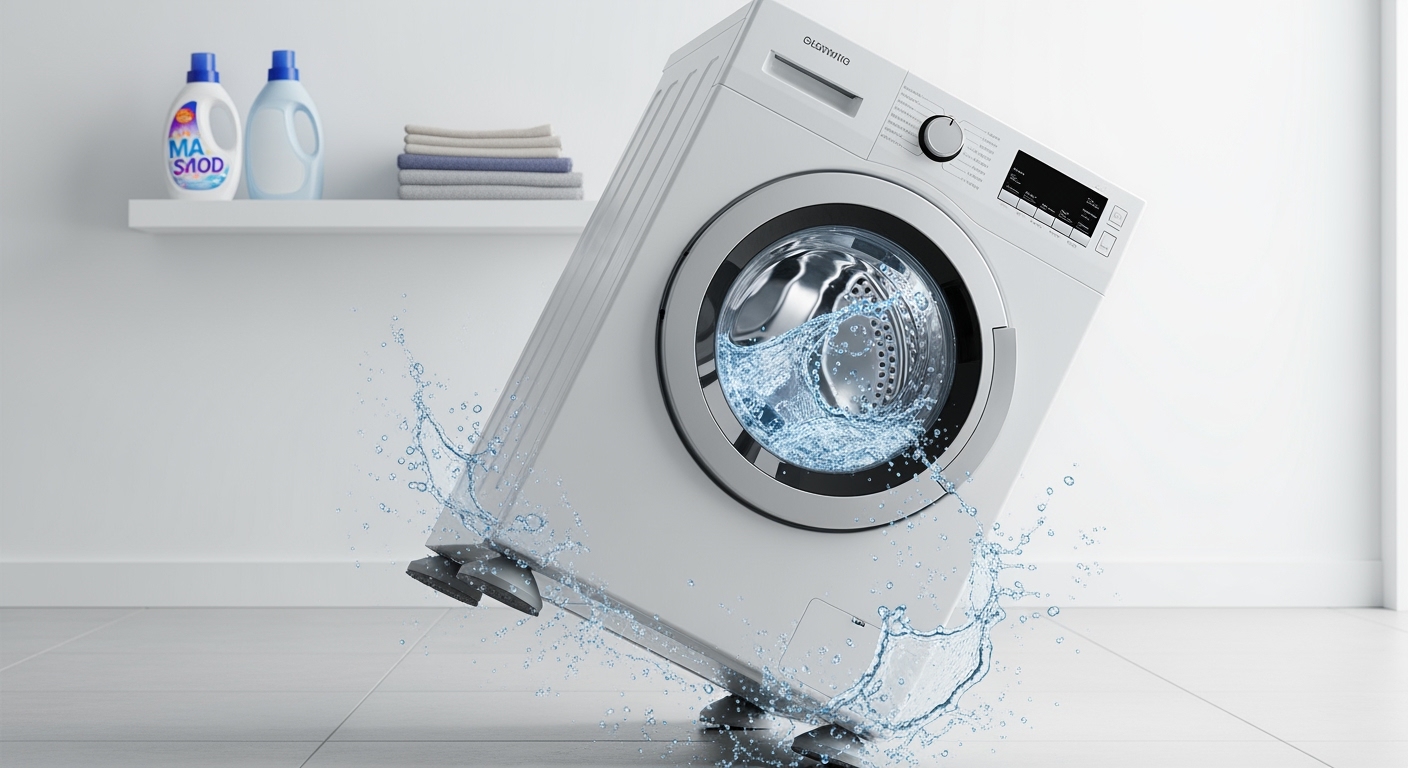
A washing machine should spin. It should not travel.
If your washer suddenly starts thumping, slamming, vibrating through the floor, or inching its way across the laundry room like it has somewhere to be, you’re dealing with what many people call a “walk-out.” It’s common, it’s loud, and honestly, it can feel a little ridiculous the first time it happens. Then the panic kicks in, because now the house is shaking and the water hoses are getting tugged.
The good news is that some washer shaking problems are simple. The less good news is that some are not, and the longer you let them continue, the more expensive the repair can get.
Here’s how to tell the difference.
If your washer is banging hard enough to rattle walls, stop the machine.
Don’t stand there hoping it will settle down on its own. A violently shaking washer can damage:
the suspension inside the machine
the drum or tub
water supply hoses
the drain hose
the flooring underneath
nearby cabinets, walls, or a dryer sitting beside it
If it’s still running, pause or cancel the cycle. If it won’t stop, unplug it. Give it a minute before opening the door or lid, especially if it was in a high-speed spin.
This matters even more with a stackable unit. A stackable washer dryer repair can get expensive fast if a wobbling lower unit puts stress on the whole setup.
Most walk-outs happen for one of two reasons:
The load inside the drum is out of balance.
The machine can’t control normal vibration anymore.
That second one is the bigger problem. All washers vibrate a bit during spin. They’re moving wet, heavy fabric at high speed. But modern machines are built to manage that movement. When they stop managing it well, the washer starts jerking, banging, or shifting across the floor.
Sometimes the fix is as simple as rearranging a blanket. Sometimes it’s worn suspension rods, bad shock absorbers, a failing bearing, or an uneven floor.
You can usually sort the problem into one of those buckets pretty quickly.
Before you start thinking about washing machine repair, check the obvious stuff. A lot of people skip this because they assume something major broke. Sometimes it did. Sometimes it’s just one soggy bath mat rolled into a heavy knot.
This is the most common reason for sudden shaking.
Washers struggle when heavy items bunch up on one side of the drum. Typical culprits include:
bedding
hoodies
towels
bath mats
one or two heavy garments washed alone
small loads with a single bulky item
A single comforter is especially bad for this. It absorbs water unevenly and shifts into a lopsided mass.
What to do:
stop the cycle
open the washer
redistribute the items evenly
remove some pieces if the load is packed too tightly
run a spin cycle again
If the machine settles down after you rebalance the load, the washer itself may be fine.
A washer needs all four feet firmly planted. If one foot is slightly off, the machine can rock during spin, and that rocking becomes pounding.
This often happens after:
moving the machine for cleaning
recent flooring work
installing a new washer
nudging the unit while cleaning behind it
How to check:
press down on the top front corners of the machine
see if it rocks
look at the feet to make sure they’re all touching the floor
use a level if you have one
Many washer feet can be adjusted by turning them. Once adjusted, the locking nuts should be tightened so the feet stay in place.
If the machine rocks even after adjustment, the floor itself may be uneven or flexing.
This one catches people more often than you’d think, especially after a recent move or installation.
Front-load washers usually ship with transit or shipping bolts that lock the drum in place for transport. If those bolts are left in, the washer can shake violently because the drum can’t move the way it’s supposed to.
Signs this might be the issue:
the washer is new or was recently relocated
the shaking started from the very first load
the machine sounds harsh and rigid, not just off-balance
Check the installation manual for your model. If shipping hardware is still installed, it needs to come out.
Sometimes the washer is fine, but the floor under it is not.
Laundry rooms on upper floors, older wood-framed homes, or slightly soft subfloors can amplify vibration. A washer spinning at high speed on a springy floor has a much harder time staying stable.
Clues:
the machine seems level, but still shakes badly
vibration feels worse at certain spin speeds
nearby walls or shelves rattle
the problem is stronger on an upstairs laundry setup
This doesn’t always mean structural trouble, but it does mean the washer may need better support, anti-vibration pads, or a professional assessment.
People usually think only overloading is a problem. Underloading can be just as bad.
A tiny load, like one sweatshirt or two towels, may not distribute evenly during spin. Front-loaders are especially fussy about this. They want enough weight to balance, but not so much that the drum is overloaded.
A good rule: avoid washing one bulky item by itself unless the manual says the machine can handle it.
If the feet are resting on slick tile, old pads, makeshift risers, or a damaged pedestal, the machine can creep during spin.
Take a look under the unit if you safely can. Anything cracked, loose, or uneven underneath can turn normal vibration into movement.
This is where washer repair becomes more likely.
If your washer keeps walking even with balanced loads and level feet, something inside may be worn or broken. And yes, the symptoms can get dramatic.
Top-load washers often use suspension rods to stabilize the tub. Front-load washers often rely on shock absorbers or dampers. When these parts wear out, the tub can swing too much during spin.
Typical signs:
repeated banging during spin
the tub seems to slam against the cabinet
the machine shakes badly with normal loads
the problem has slowly gotten worse over time
Some washers use springs to help hold the tub in position. If a spring breaks or stretches out, the drum can move too freely.
You might notice:
a sudden change in vibration
a tilted tub
banging that sounds metal-on-metal
A failing tub bearing is a bigger repair, and the sound is often the clue. Instead of just thumping, you may hear a growling, roaring, or grinding noise that gets louder during spin.
This is one of those issues people try to ignore because the washer still works, technically. I wouldn’t. Bearings don’t usually fix themselves through optimism.
Some front-load washers use concrete or other heavy counterweights to keep the unit stable. If one loosens or cracks, the machine can shake violently.
That kind of repair is not a good DIY project for most homeowners. Those parts are heavy, awkward, and not forgiving.
Inside some front-load machines, the drum is supported by a metal structure often called a spider arm. If it corrodes or cracks, the drum becomes unstable.
Possible signs:
drum feels loose when moved by hand
scraping sounds
severe vibration even with small, balanced loads
repeated off-balance errors
At that point, professional washing machine repair is usually the next step.
If your washer just had its first meltdown, run through this list.
Spread items evenly. Remove bulky pieces if needed. Try a rinse and spin.
Test for rocking. Adjust the feet if needed.
If the machine is new or recently moved, check for shipping bolts or setup errors.
Make sure hoses aren’t pulling, the drain hose isn’t jammed, and the floor underneath feels solid.
Use a medium-sized load of mixed items, not one blanket and not one towel.
If the shaking is gone, you probably dealt with a balance or leveling issue.
If it comes back right away, especially with an ordinary load, it’s time to think beyond DIY.
There’s a line between “annoying vibration” and “this needs a technician.” Here’s where that line usually is.
A tiny shift over months is one thing. A machine that lurches inches in one cycle is another.
If you’ve already ruled out load issues and leveling, repeated violent shaking points to internal wear.
With the machine off, gently move the drum or basket. Excessive play is a bad sign.
Those sounds often mean bearing, drum, or support damage.
Shaking can loosen hose connections or damage seals. Water plus electrical equipment is not something to gamble with.
Stop using the washer immediately.
A stackable washer dryer repair issue should be handled quickly. Once the lower washer becomes unstable, the entire unit can become unsafe.
Transport-related damage and installation mistakes are common causes of heavy vibration.
That’s the point where more experimenting usually wastes time and risks more damage.
This sounds minor, but it helps a lot. If you do end up searching for Appliance Repair Near me or Washer Repair Near me, a clear description can speed up diagnosis and get the right parts lined up sooner.
Be ready to share:
whether it’s a top-load or front-load washer
the brand and model number
when the shaking happens, only during spin or throughout the cycle
whether the machine also makes grinding, banging, or scraping sounds
whether the washer leaks
whether it was recently moved or installed
whether the load was balanced when it happened
If you’re in Maple Ridge and Surrounding Areas, this kind of detail is especially useful if you’re hoping for same day service or Same Day Appliance Repair. A technician with the right information can show up better prepared.
And yes, certified technicians matter here. A washer that’s simply out of level is one thing. A washer with suspension failure, bearing damage, or a loose counterweight needs someone who knows what they’re looking at.
They fail differently.
Front-loaders often produce severe vibration when:
shipping bolts are left in
shocks wear out
the drum support system fails
a large item clumps to one side
They also spin faster, so small balance problems can feel huge.
Top-load machines often run into trouble with:
uneven loads
worn suspension rods
bad tub balance rings
weak springs
They’re sometimes a bit more forgiving, but when they go off-balance, the banging can be intense.
You can’t prevent every repair, but you can lower the odds.
A mix of small and medium items balances better than one giant absorbent piece.
Clothes need room to move and redistribute.
If you must wash one blanket or comforter, check the manual first and consider adding balancing items if the manufacturer allows it.
Especially if the washer sits on tile, vinyl, or a slightly uneven floor.
A little extra vibration, a new knocking sound, or a machine that suddenly feels louder than usual is worth noticing. People often wait until the washer is slamming into the walls before they take it seriously.
That delay is expensive.
A washer should be noisy sometimes. It should not sound like it’s trying to break through the floor.
If the problem is a bad load or uneven feet, you may be able to fix it in ten minutes. If the machine keeps shaking with normal use, don’t keep testing it out of stubbornness. That’s how a manageable washer repair turns into damage to the tub, cabinet, hoses, flooring, or the dryer parked beside it.
Start with the simple checks. Stop the cycle if it gets violent. And if the machine keeps walking, banging, grinding, or leaking, it’s time for proper appliance repair.
Because a washing machine’s job is to clean clothes, not redecorate your laundry room.

Master Appliance Service offers certified appliance repair solutions in Maple Ridge and surrounding cities with licensed technicians delivering prompt, reliable service. Enjoy transparent pricing, secure payments, and a 3-month warranty on parts and labor. Trust us for dependable and convenient home appliance repairs.
